Books
In 2025 (1st Ed.)
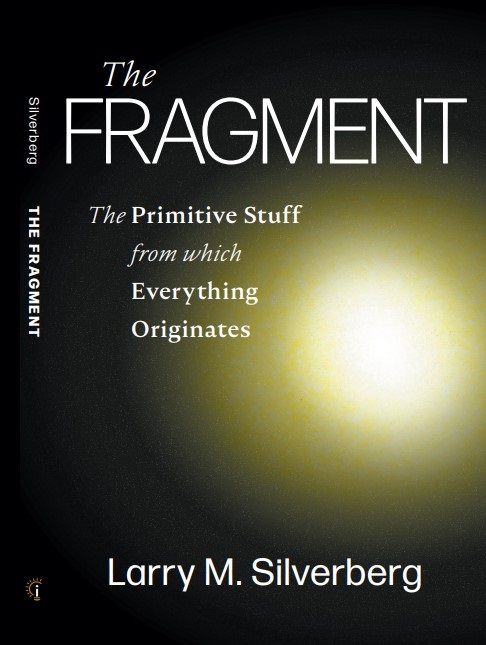
From particles and waves to fragments of energy — reminiscent of the stars in the sky — the primitive stuff of the universe.
In 2024 (4th Ed.)

BOOK + KIT FOR LABORATORY INSTRUCTION
Larry M. Silverberg and Chau M. Tran, “Fundamentals in Analog Circuits,” promotional video by Great River Learning, entitled “Explore the Digital Textbook: Fundamentals in Analog Circuits: From Five Circuits to a PD Controller”
Articles in magazines
March 21, 2025, Episode 1 of The Fragment: A Podcast on space, time, and matter
April 22, 2024, NPR (Audio), Larry M. Silverberg. Why does the field concept in modern physics make sense
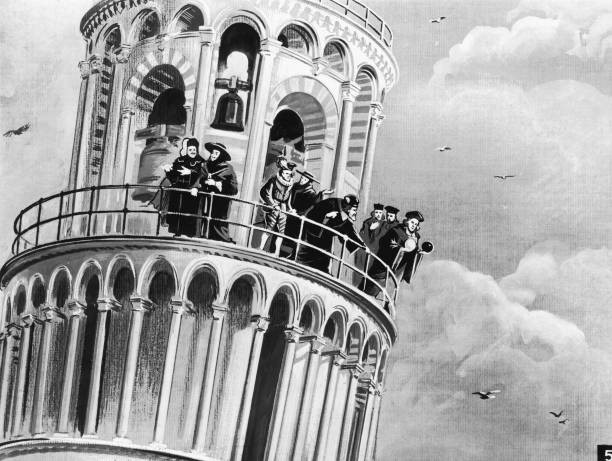
December 1, 2023, The conversation, Larry M. Silverberg. Bringing clasical physics into the modern world with Galileo’s leaning tower of Pisa experiment
December 9, 2020, The conversation, Larry M. Silverberg. Fragments of energy – not particles or waves – may be the fundamental building blocks of the universe
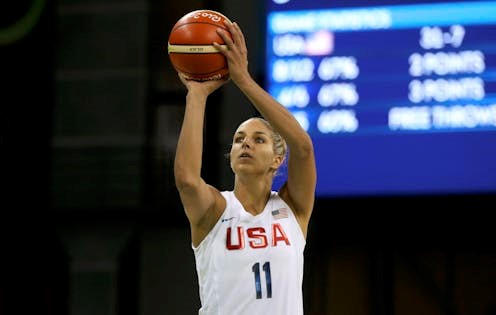
January 23, 2019, The conversation, Larry M. Silverberg. Women are better then men at the free throw line. See promotional video –>
March 1, 2018, The Conversation, Larry M. Silverberg. The math behind the perfect free throw

Articles in archival journals
Larry M. Silverberg (2026) “Reframing spacetime: the emphasis on proper time,” Phys. Educ. 60 015012. DOI: 10.1088/1361-6552/ad0f7a (PDF)
Larry M. Silverberg and Jeffrey W. Eischen (2025) “The Minkowski metric equation with a metric triangle applied to the twin paradox,” Phys. Educ. 60 055029 (PDF)
Larry M. Silverberg and Jeffrey W. Eischen (2025) “Proof of the GM-GR parity theorem for the two-body problem” J. Physics Essays 38, 2, p. 122-127. DOI: 10.4006/0836-1398-38.2.122 (PDF)
Lane R. Miller, Larry M. Silverberg, Jeffrey W. Eischen, and Samuel R. Miller (2024) “How Schwarzschild could have discovered and fixed the problem with his metric,” J. Physics Essays 37, 1, p. 74-79, DOI: 10.4006/0836-1398-37.1.74 (PDF)
Larry M. Silverberg and Chau M. Tran (2024) “High performance computing of the nonlinear dynamics of a basketball.” J. Nonlinear Dynamics (2024): 1-13. DOI: 10.1007/s11071-024-09833-z (PDF)
Larry M. Silverberg and Jeffrey W. Eischen (2023) “Spacecraft’s trajectory when it passes by a gravitational body during interstellar travel,” J. Spacecraft and rockets, Published in advance online on 8 September 2023, DOI:10.2514/1.A35684 (PDF)
Larry M. Silverberg and Jeffrey W. Eischen (2021) “Theory of spacetime impetus,” J. Physics Essays 34, 4, p. 548-563, DOI: 10.4006/0836-1398-34.4.548 (PDF)
Larry M. Silverberg and Jeffrey W. Eischen (2020) “On a new field theory formulation and a space-time adjustment that predict the same precession of Mercury and the same bending of light as general relativity,” J. Physics Essays 33, 4, p. 489-512, DOI: 10.4006/0836-1398-33.4.489 (PDF)
Videos
MAE 398 Fall 2025
December 6, 2025, Divya Vaswani, The Hidden Force: A Video on the Strong Nuclear Force
FIRST PLACE AWARD Vaswani gives a wonderful explanation behind the discovery of the strong nucler force.
December 6, 2025, Preston Beiler, Volta and Frankenstein
SECOND PLACE AWARD Beiler explains the role of Frankenstein in the evolution of the greatest technological revolution – electricity – of in the first part of the 20th century.
December 6, 2025, Emma Studnek, Exoplanets: life beyond our own
THIRD PLACE AWARD Studnek changes the way you might think about the possibilities of life on other planets.
MAE 398 Spring 2025
March 30, 2025, Jason Clifford, Science and Fiction
FIRST PLACE AWARD Clifford discusses the intimate interplay that evolves between science and fiction.
March 30, 2025, Haneen Azhar, Binary Stars
SECOND PLACE AWARD Azhar explains that the magnificent Waltz of the binary star informs us of much of what we know about the universe.
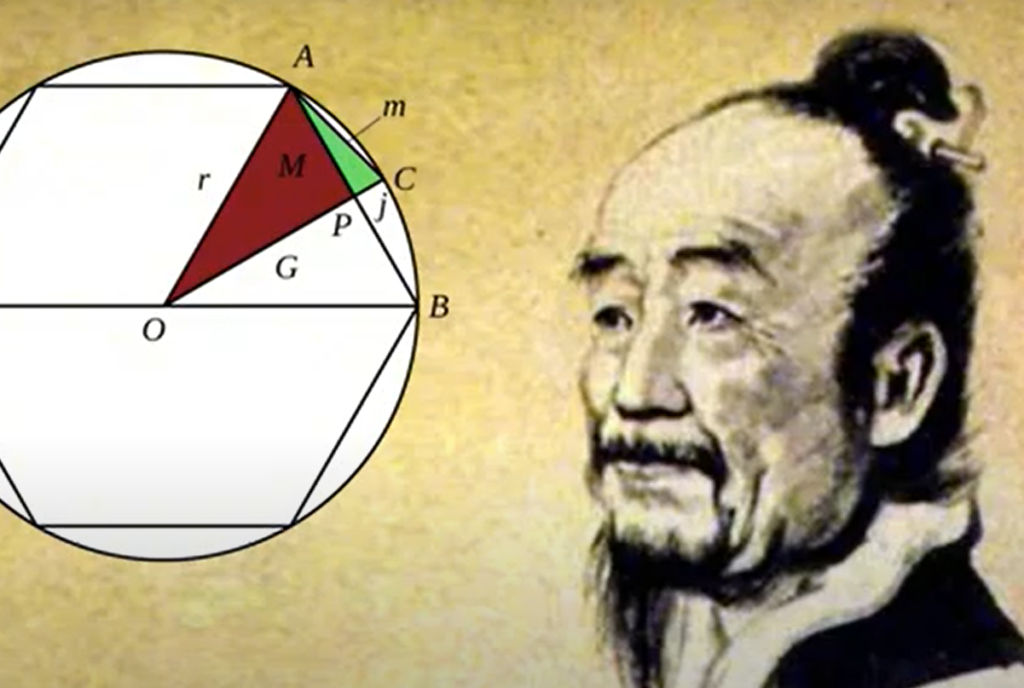
March 30, 2025, Zac Flontek, How to Fail like Elon Musk; Anne Morrell, Elementary Particles; Jared Rice, Untold History of Math and Science
THIRD PLACE AWARD (TIE BETWEEN 3 DOCUMENTARY VIDEOS) Flontek explains why everyone can learn alot from Musk’s method of “failure.” Morrell points out that elementary particles tell us something about matter that will surprise you. Rice reminds us of the forgotten roles of the great civilizations upon which math and science were built.
MAE 398 Fall 2024
December 9, 2024, Chyah Jacobs, Biotech through the Centuries
FIRST PLACE AWARD This video walks you through several of the milestones in biotechnology since the discovery of the cell in 1655.
December 9, 2024, Jake Holt, The Unknown Father of Modern Algebra
SECOND PLACE AWARD John Wallis is possibly the greatest influencer of mathematics of all time and yet most of us have never heard of him. This video explains.
December 9, 2024, Nathan Rein, The Evolution of Mathematics Education
THIRD PLACE AWARD How and why did today’s math education come to be? Starting with the ancient Mesopotamians, and working our way to the present day, this video explains the key steps in shaping the way the world teaches math.
MAE 398 Fall 2022
December 4, 2022, Gabriel Chenevert. Voyager II: A unique opportunity
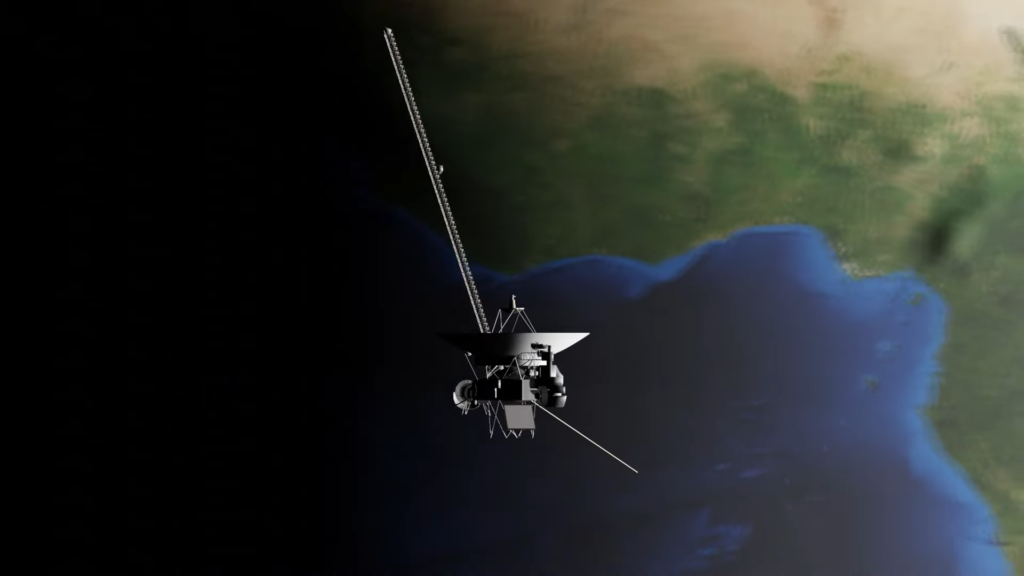
December 4, 2022, Victor J. Hugo. How does light bend?
November 29, 2022, Fernanda D’Agostini Barsanti. Gravitational lensing: Finding the morning star
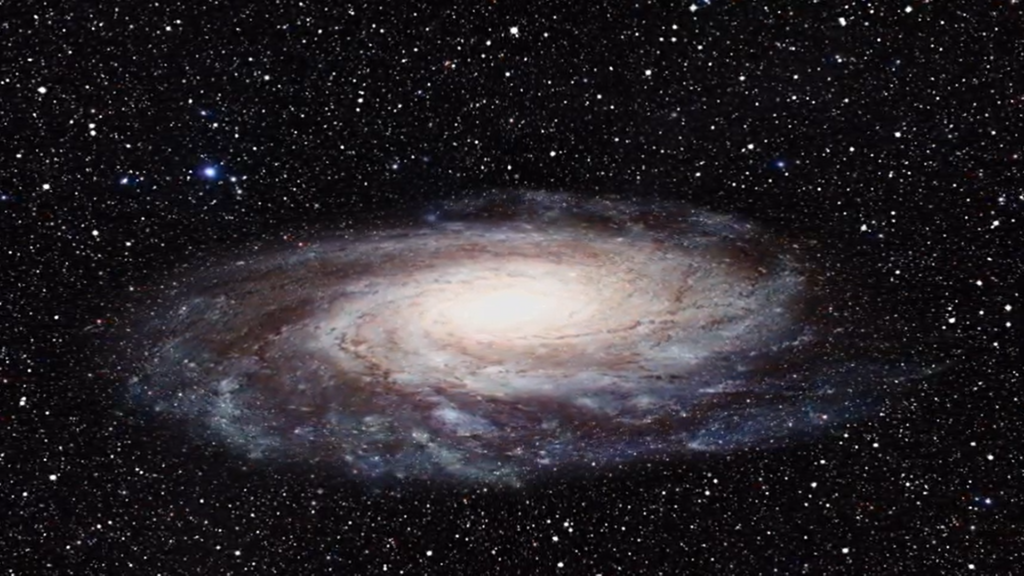
November 9, 2021, Noah Gassner. The concept of impetus: a new twist on an old idea
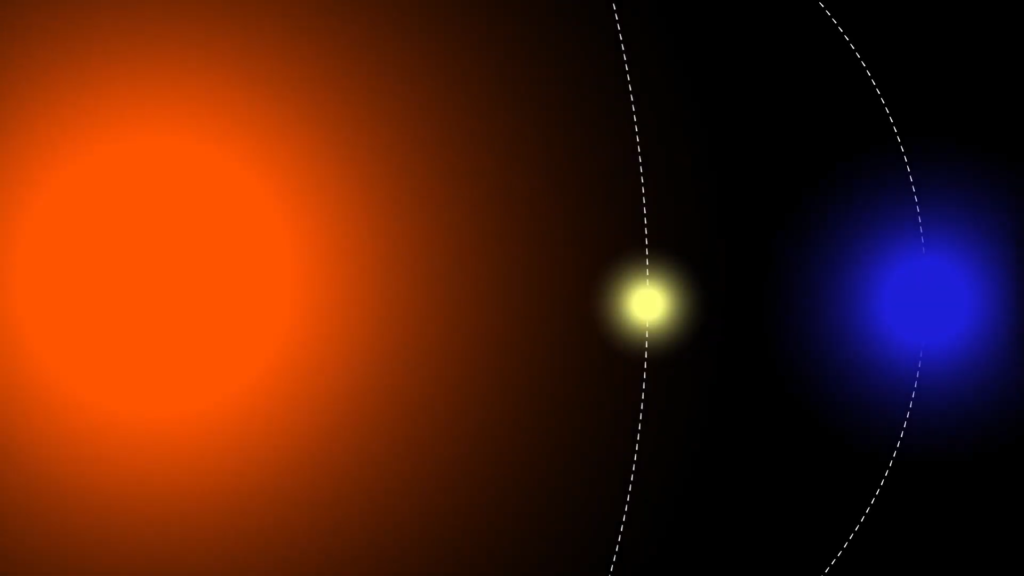
April 20, 2021, Ricky Puyana. Particles and waves are not the fundamentals building blocks of our universe | modern theory of impetus

November 28, 2020, Ricky Puyana. The fragment: the primitive stuff from which everything originates
May 26, 2021, Marley Cook. Go with the flow

May 31, 2021, Alex Gellios. On spacetime impetus
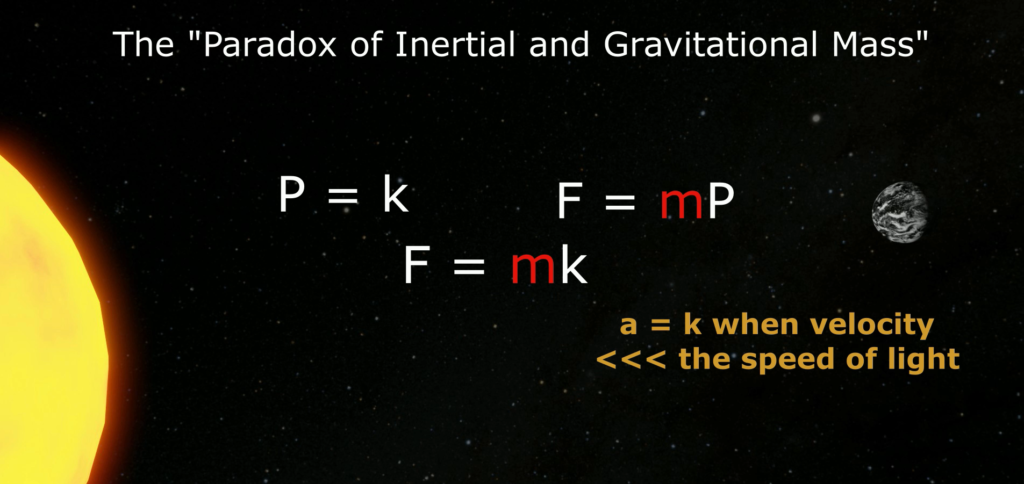
December, 1993, Larry M. Silverberg. Space shuttle experiment 2: callibration of ground-based radar to see incoming intercontinental missiles